How to Get Rid of Old Roof Shingles in Baytown
The simplest way to get rid of old shingles in Baytown is a roll-off dumpster parked near the roof. Shingles are heavy, so plan by weight first. Check the weight printed on your bundle wrapper, multiply by your squares, and match the total to a dumpster's included tons. Extra weight costs $75 per ton.
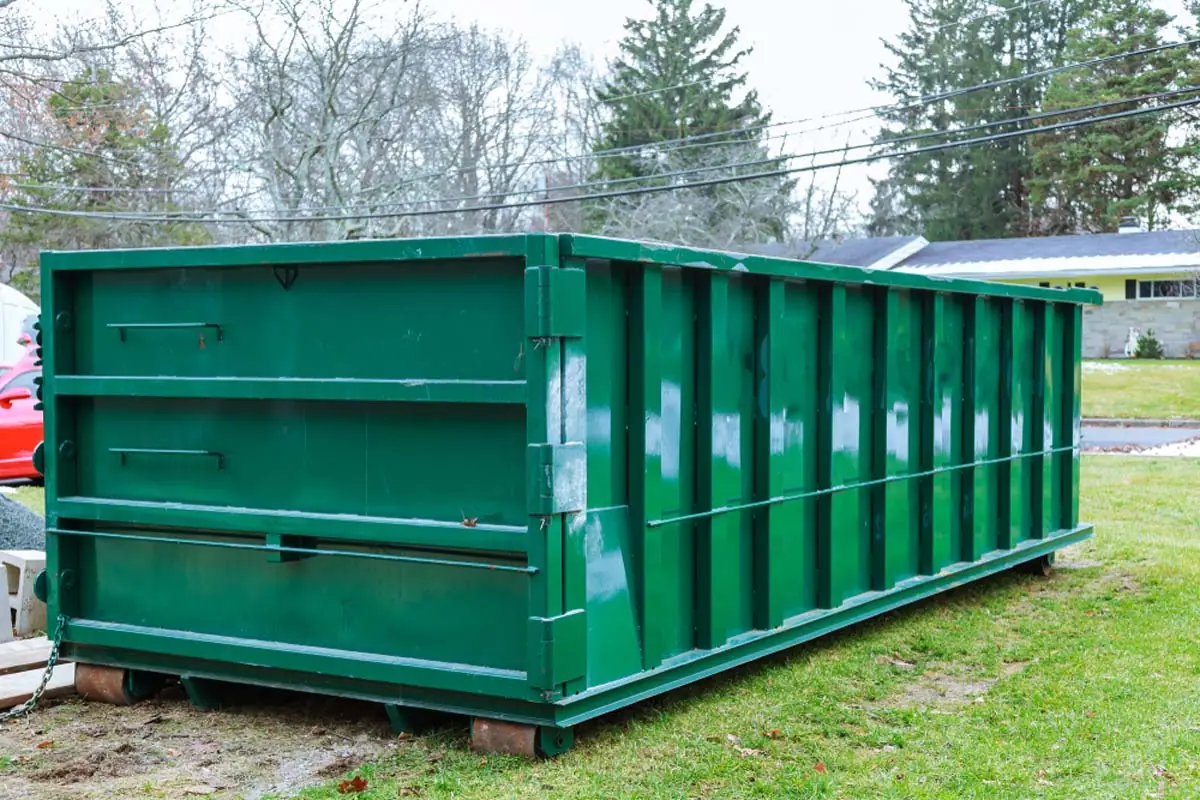
What are my options for old shingles?
Old shingles leave a tear-off in one of three ways: a roll-off dumpster, a roofer who hauls them, or many small trips in a pickup. A dumpster lets shingles drop straight from the roof. Pickup trips add time and dump fees. Household trash service is not built for a full roof of shingles.
| Option | Good for | Watch out for |
|---|---|---|
| Roll-off dumpster | DIY tear-offs and roofers who don't haul | Included tons and the overage rate |
| Roofer hauls it | Full-service roof jobs | Ask if disposal is in the roof quote |
| Pickup truck trips | A few squares of repair | An 8-ft bed holds about 2 to 3 cubic yards, and shingles get heavy fast |
Before putting any roofing debris at the curb, check with the City of Baytown. Don't assume regular pickup will take it.
Have a question about your job? Get the size, included tons and flat rate in one call.
Call now (281) 673-4344How much do my old shingles weigh?
Your shingles weigh what the bundle wrapper says, times the bundles per square, times your squares. If your bundles weigh 70 lb and a square takes 3 bundles, one square of one layer is 210 lb. Use your own bundle weight. A second layer roughly doubles the total, and rain adds more.
Worked example
A 25-square roof, one layer, 70-lb bundles, 3 bundles per square:
- 25 squares × 210 lb = 5,250 lb
- 5,250 lb ÷ 2,000 = about 2.6 tons
That fits under the 3 tons included with a 20-yard dumpster. Two layers would land well over it. See how dumpster weight is billed for the scale ticket math.
Which dumpster size works for a shingle tear-off?
The right size for a shingle tear-off is the one whose included tons cover your weight math. A 10-yard includes 2 tons, a 15-yard 2.5 tons, a 20-yard 3 tons and a 30-yard 4 tons. Extra weight costs $75 per ton, billed by the exact pound from the landfill scale ticket.
| Size | Included tons | Outside size |
|---|---|---|
| 10-yard | 2 | 12 × 8 × 3.5 ft |
| 15-yard | 2.5 | 16 × 7.5 × 4.5 ft |
| 20-yard | 3 | 22 × 8 × 4 ft |
| 30-yard | 4 | 22 × 8 × 6 ft |
For sizing by squares and layers, use the roofing dumpster rental page. You can also compare the 20-yard dumpster and the 30-yard dumpster.
Where should the shingle dumpster go?
The shingle dumpster should sit close to the roof edge where debris comes down, on a paved driveway when possible. Wooden boards go under the rails to protect concrete and asphalt. Keep the spot clear of cars, low wires and branches, or a $125 dry run fee applies.
A federal safety rule applies to roof work. OSHA 29 CFR 1926.252(a) requires an enclosed chute when material drops more than 20 feet outside the exterior walls (OSHA 1926.252). Confirm with your permit office, HOA or landfill before work starts. More on spots and clearance in the driveway placement guide.
Can I add other roofing debris to the dumpster?
Old felt, underlayment, drip edge, flashing and rotted decking can all go in with your shingles. Nails and wrappers can too. Batteries from tools, sealant tubes with wet product and other chemicals cannot. Remember the extra decking adds weight, so count it in your tons.
For the full list, read what you can put in a dumpster.