What You Can and Can't Put in a Roll-Off Dumpster
Most household junk, furniture, remodel debris, roofing shingles and yard waste can go in a roll-off dumpster. Hazardous chemicals, wet paint and batteries cannot. Mattresses, tires and appliances with Freon can go in for $50 extra per item. Concrete, dirt and brick go only in a 10- or 15-yard dumpster, loaded no more than halfway up the walls.
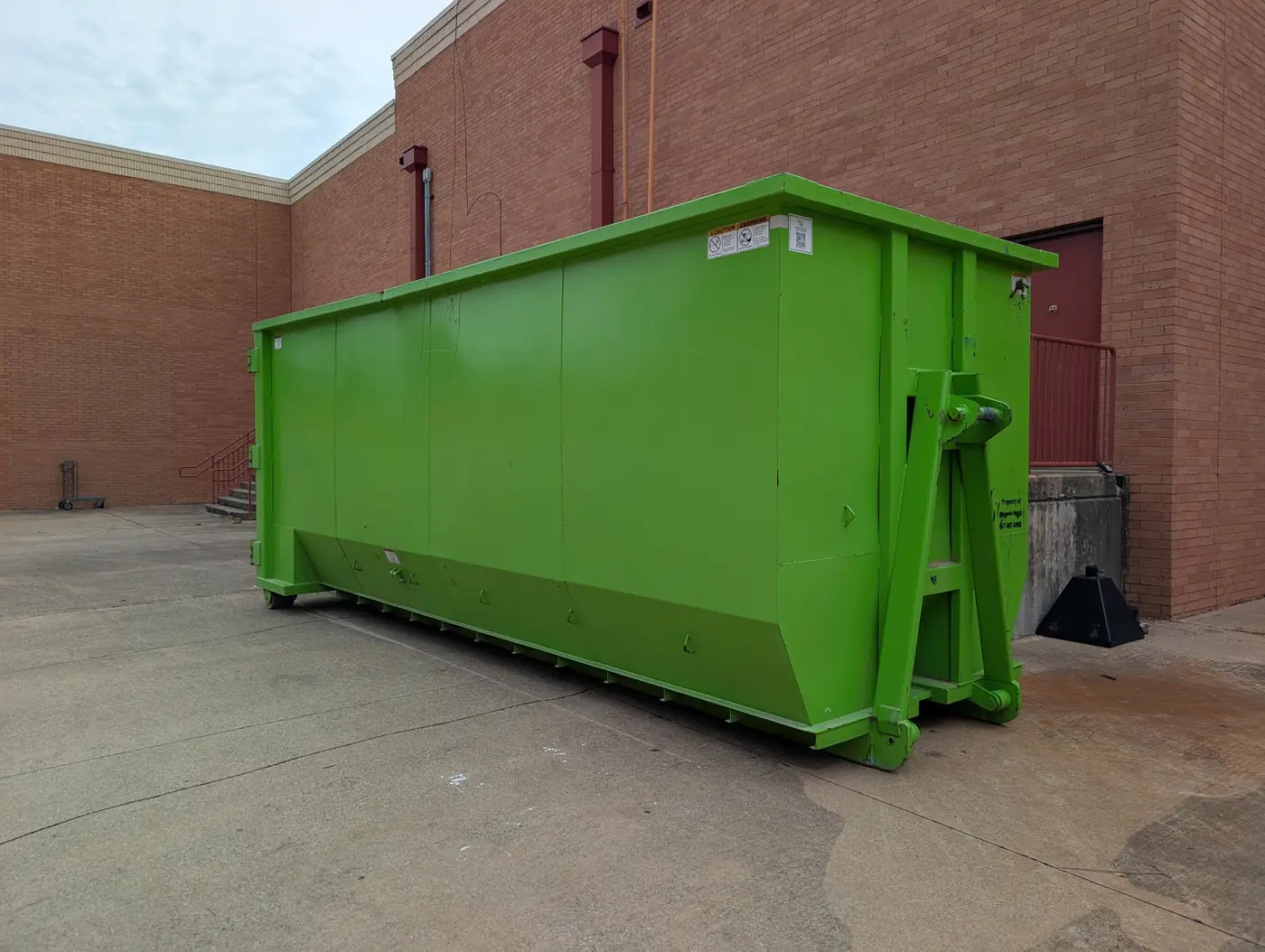
What can you put in a roll-off dumpster?
A roll-off dumpster takes most dry, non-hazardous debris: furniture, boxes, carpet, drywall, lumber, cabinets, flooring, shingles, brush and general household junk. Heavy debris such as concrete, dirt, brick and sand is allowed in the 10- and 15-yard sizes only. Those heavy loads stop halfway up the walls so the truck can carry them safely.
| Item | Allowed? | Notes |
|---|---|---|
| Furniture, couches, chairs, tables | Allowed | Break down large pieces to save space. |
| Household junk, boxes, toys, clothing | Allowed | Bag loose small items. |
| Drywall, lumber, trim, doors, cabinets | Allowed | Pull or bend nails where you can. |
| Carpet, pad, vinyl, laminate, wood flooring | Allowed | Roll carpet tight and lay it flat. |
| Asphalt roofing shingles | Allowed | Heavy. Check the weight before you pick a size. |
| Brush, branches, leaves, yard waste | Allowed | Cut long limbs so they lie flat. |
| Concrete, dirt, brick, sand | 10- and 15-yard only | Load no more than halfway up the walls. Clean, unmixed loads qualify for clean-fill pricing. |
Weight sets your bill more than space does. Each size includes a set number of tons, and extra weight is billed at $75 per ton by the exact pound. See how dumpster weight is billed before you load heavy material.
Have a question about your job? Get the size, included tons and flat rate in one call.
Call now (281) 673-4344Which items are banned from a dumpster?
Hazardous chemicals, wet paint and batteries are banned from every dumpster we rent. That includes solvents, pesticides, pool chemicals, motor oil and cleaners. These items can leak, react or catch fire in a load. Federal and Texas guidance sends them to household hazardous waste collection instead of a landfill roll-off.
| Banned item | Why | Where it goes instead |
|---|---|---|
| Wet paint, stains, thinners, solvents | Liquids leak and can catch fire. | Household hazardous waste collection |
| Batteries (car, tool, household) | Can short out, leak acid or start fires. | Household hazardous waste collection, or ask the store that sells replacements |
| Pesticides, herbicides, pool chemicals | Toxic and reactive. | Household hazardous waste collection |
| Motor oil, fuel, antifreeze | Liquids that pollute soil and water. | Household hazardous waste collection |
| Household cleaners and other chemicals | Can react with other waste. | Household hazardous waste collection |
Not sure about an item? Ask when you call. Fully dried latex paint is a common question, so mention it if you have some.
Which dumpster items cost extra?
Mattresses, tires and appliances that hold Freon cost $50 extra per item. Freon appliances include refrigerators, freezers, window air conditioners and dehumidifiers. These items need special handling at disposal, so the fee covers that work. Tell us the count when you book, and the charge appears on your final invoice with the scale ticket.
| Extra-fee item | Fee | What to know |
|---|---|---|
| Mattress or box spring | $50 each | Count each piece you put in. |
| Tire | $50 each | Texas scrap tires follow TCEQ tire rules. |
| Refrigerator or freezer | $50 each | Holds refrigerant (Freon). |
| Window air conditioner or dehumidifier | $50 each | Holds refrigerant (Freon). |
Extra-fee items are one of the reasons a final bill can run higher than expected. Read why dumpster bills go over the quote for the full list of charges to plan around.
Why does a fridge or freezer need special handling?
Federal rule 40 CFR 82.155 requires refrigerant to be recovered before fridges, freezers and window air conditioners reach final disposal. Refrigerant harms the ozone layer if it escapes. That recovery step is why these appliances carry a $50 per-item fee. The law sets the requirement; the fee is our charge for the handling.
Where do banned items go instead of a dumpster?
Household hazardous waste goes to a local household hazardous waste collection site or event. The EPA lists paint, cleaners, oils, batteries and pesticides as household hazardous waste. The Texas Commission on Environmental Quality (TCEQ) explains how Texas residents can find collection programs. Check your city or county before you drive anything over.
- Find a collection program. Start with the TCEQ household hazardous waste page, then check your city or county website for drop-off days.
- Keep products in their original containers. Labels help collection staff handle them safely. Don't mix chemicals.
- Ask stores about batteries and tires. Many shops that sell car batteries or tires take back the old ones. Ask before you buy.
- Plan scrap tires early. Texas scrap tire rules are set by the TCEQ tire program. Or put tires in your dumpster for $50 each.
Read the EPA household hazardous waste guide for safe storage tips while you wait for a collection day.
Can roofing, remodel and storm debris go in the same dumpster?
Mixed roofing, remodel and storm debris can share one dumpster, as long as none of it is hazardous. Shingles, drywall, lumber and branches all go in together. The catch is weight: shingles and wet debris are heavy. Clean concrete or dirt should stay unmixed in a 10- or 15-yard dumpster to qualify for clean-fill pricing.
Older homes add two rules worth knowing. Asbestos work can require inspection and notice under EPA 40 CFR 61.145. Paid renovators in pre-1978 homes follow the EPA lead Renovation, Repair and Painting rule. Confirm with your permit office, HOA or landfill before demolition starts.
Pick the job that fits yours: roofing dumpster rental, home cleanout dumpster rental or concrete and dirt dumpster rental.