How Dumpster Weight Is Weighed and Billed
Every dumpster has a weight limit: the included tons on your quote. The landfill's digital scale weighs the loaded truck (gross) and the empty truck (tare); the difference is your debris. Weight over the limit costs $75 per ton, billed to the exact pound, and the scale ticket comes with your invoice.
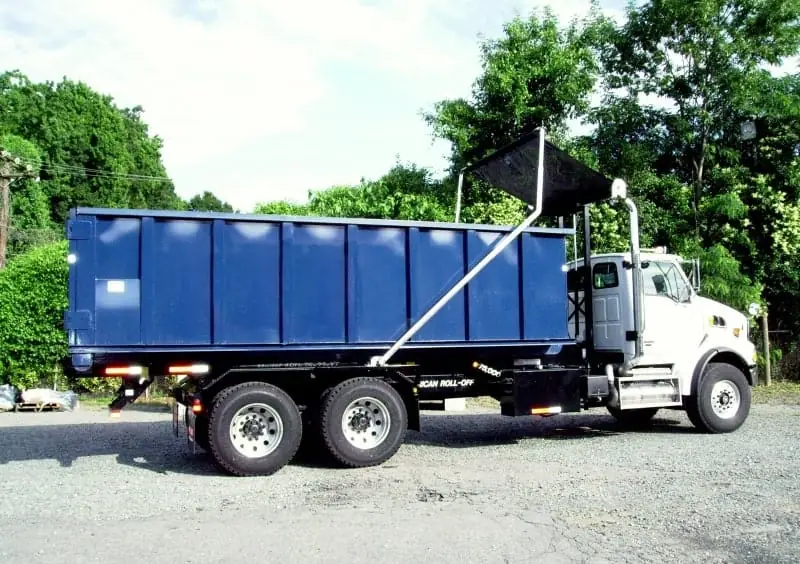
How is the weight of my dumpster measured?
Dumpster weight is measured twice on the landfill's digital scale. The truck is weighed loaded, called the gross weight, and empty, called the tare weight. Gross minus tare equals the net weight of your debris. The net weight is the only number compared with your included tons.
Example scale ticket (numbers for illustration only):
| Line on the ticket | Example | What it means |
|---|---|---|
| Gross | 32,400 lb | Truck with your loaded dumpster |
| Tare | 25,200 lb | Truck weighed empty |
| Net | 7,200 lb (3.6 tons) | Your debris only: gross − tare |
One ton is 2,000 lb. If that load came from a 20-yard with 3 tons (6,000 lb) included, 1,200 lb is over the limit.
Have a question about your job? Get the size, included tons and flat rate in one call.
Call now (281) 673-4344Do I get a copy of the dumpster scale ticket?
A copy of the landfill scale ticket is attached to every final invoice. The final invoice is emailed 3 to 5 business days after pickup. You can check the net weight on the ticket against the weight on your bill line by line, so an overage charge always comes with proof.
A scale ticket typically shows the date, the gross weight, the tare weight and the net weight. If a number on your invoice doesn't match the ticket, call (281) 673-4344 and have the invoice in front of you.
How much is the dumpster overage fee for each size?
The dumpster overage fee is $75 per ton over your included weight, billed pro-rata by the exact pound. That works out to $3.75 for every 100 lb over. Nothing is rounded up to a full ton, so 300 lb over costs $11.25, not $75.
Worked examples for each size, using example net weights:
| Size | Included | Example net weight | Over the limit | Overage charge |
|---|---|---|---|---|
| 10-yard | 2 tons (4,000 lb) | 4,860 lb | 860 lb (0.43 tons) | 0.43 × $75 = $32.25 |
| 15-yard | 2.5 tons (5,000 lb) | 5,640 lb | 640 lb (0.32 tons) | 0.32 × $75 = $24.00 |
| 20-yard | 3 tons (6,000 lb) | 7,200 lb | 1,200 lb (0.6 tons) | 0.6 × $75 = $45.00 |
| 30-yard | 4 tons (8,000 lb) | 9,040 lb | 1,040 lb (0.52 tons) | 0.52 × $75 = $39.00 |
A load under the included tons has no overage charge. For every other fee, see the dumpster rental cost guide.
What are the weight rules for concrete, dirt and brick?
Concrete, dirt, brick and sand go only in 10- and 15-yard dumpsters, loaded no more than halfway up the walls. Heavy debris reaches the weight limit long before the dumpster looks full. A clean, unmixed load of one heavy material qualifies for clean-fill pricing, so keep trash out of it.
Normal-weight concrete weighs about 150 lb per cubic foot, or about 2 tons per cubic yard when solid. A 4-inch slab is about 50 lb per square foot. The 2 tons in a 10-yard cover about 80 square feet of that slab; the 2.5 tons in a 15-yard cover about 100.
Roofing shingles
Check the weight printed on your bundle wrapper. If your bundles weigh 70 lb and a square takes 3 bundles, one square of one layer is 210 lb. A 20-yard with 3 tons (6,000 lb) covers about 28 squares. A 30-square roof at that weight is 6,300 lb, or 300 lb over: $11.25. The concrete and dirt dumpster page and the roofing dumpster page cover those jobs.
Does rain make a dumpster weigh more?
Rain makes a dumpster weigh more, because wet debris is heavier than dry debris. The landfill scale can't tell water from debris, so soaked drywall, carpet, wood and yard waste all add billable weight. Covering an open dumpster with a tarp before rain is the simplest way to keep the net weight down.
Tie the tarp down so wind can't lift it, and fold it off before pickup day. Never pile debris higher to hold the tarp in place; the load still has to sit level with the top rim.
How do I keep my dumpster under the weight limit?
Keep a dumpster under the weight limit by choosing the size for your heaviest material, not your total volume. Put concrete, dirt, brick and sand in a 10- or 15-yard filled halfway. Keep the load covered before rain, and keep neighbors' debris out, since every pound on the ticket is billed to you.
- Estimate weight before you book, using your shingle wrapper weight or the concrete math above.
- Separate heavy debris from light debris into different dumpsters.
- Spread heavy items across the floor instead of stacking them in one spot.
- Cover the load when rain is in the forecast.
- Call (281) 673-4344 if you think you are close to the limit; a swap may cost less than the overage.
For loading order and the fill line, read how to load a dumpster.